Huanzhang Advances Preparatory Work for TFA-01 Canine Osteoarthritis Clinical Trials
An Antcin A injectable nanoformulation developed in collaboration with Taiwan’s Institute of Animal Vaccine Technology and the Functional Materials and Analytical Technology Laboratory is intended for administration and observation studies in dogs by the Shanghai Paitesai team.
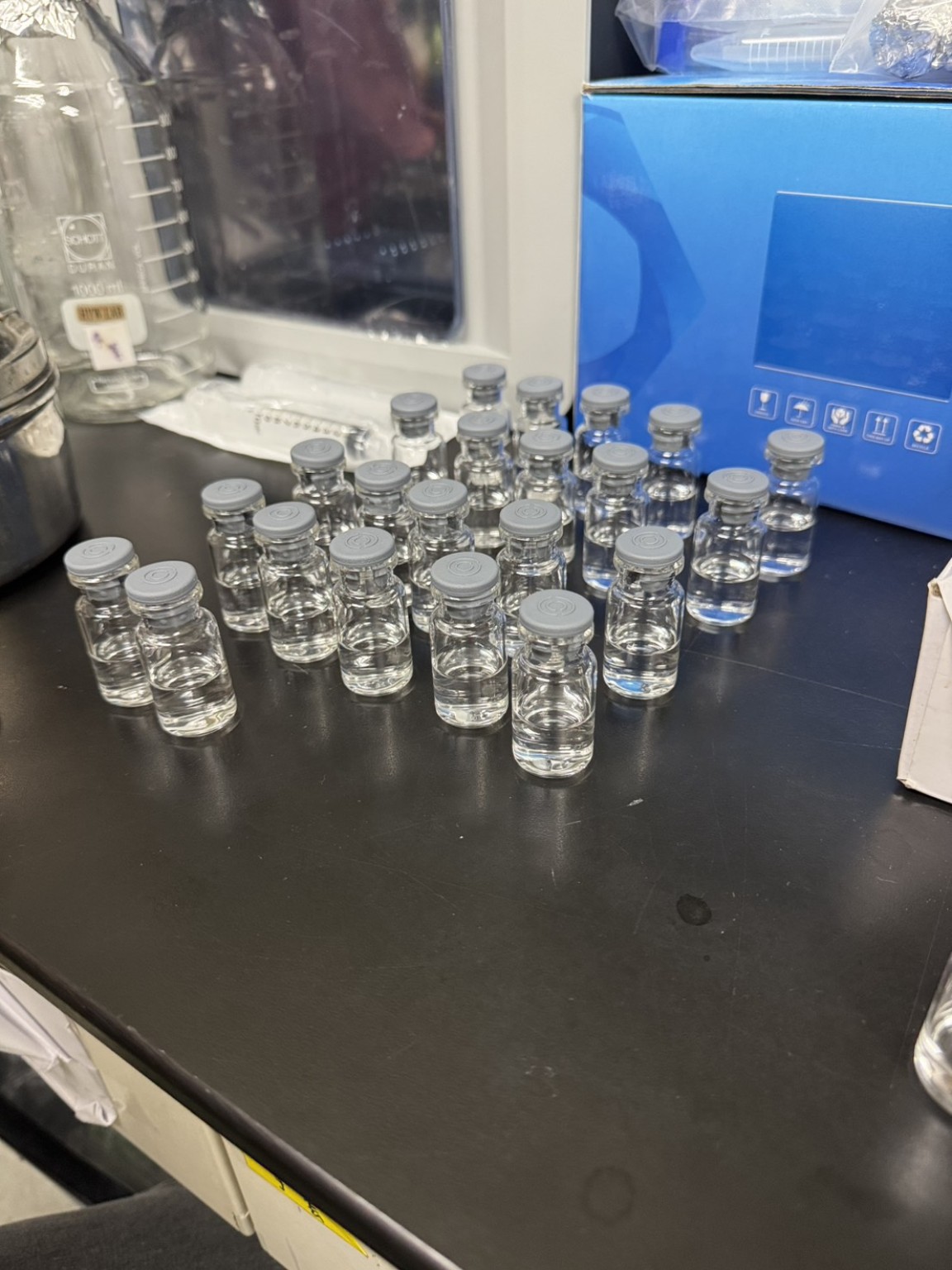
XIAMEN, October 7, 2026 — Xiamen Huanzhang Biopharmaceutical Technology Co., Ltd. (“Huanzhang”) has received the TFA-01 Antcin A injectable nanoformulation. Professor Hsian-Yu Wang’s team at Taiwan’s Institute of Animal Vaccine Technology and Dr. Wei-Yu Chen’s team at the Functional Materials and Analytical Technology Laboratory participated in its development. Each vial contains 5 mL, with an Antcin A concentration of 150 ppm.
Huanzhang will coordinate study arrangements with Shanghai Paitesai. The formulation is intended for administration to dogs with osteoarthritis and subsequent observation, supporting preparatory work for TFA-01 clinical trials in China.
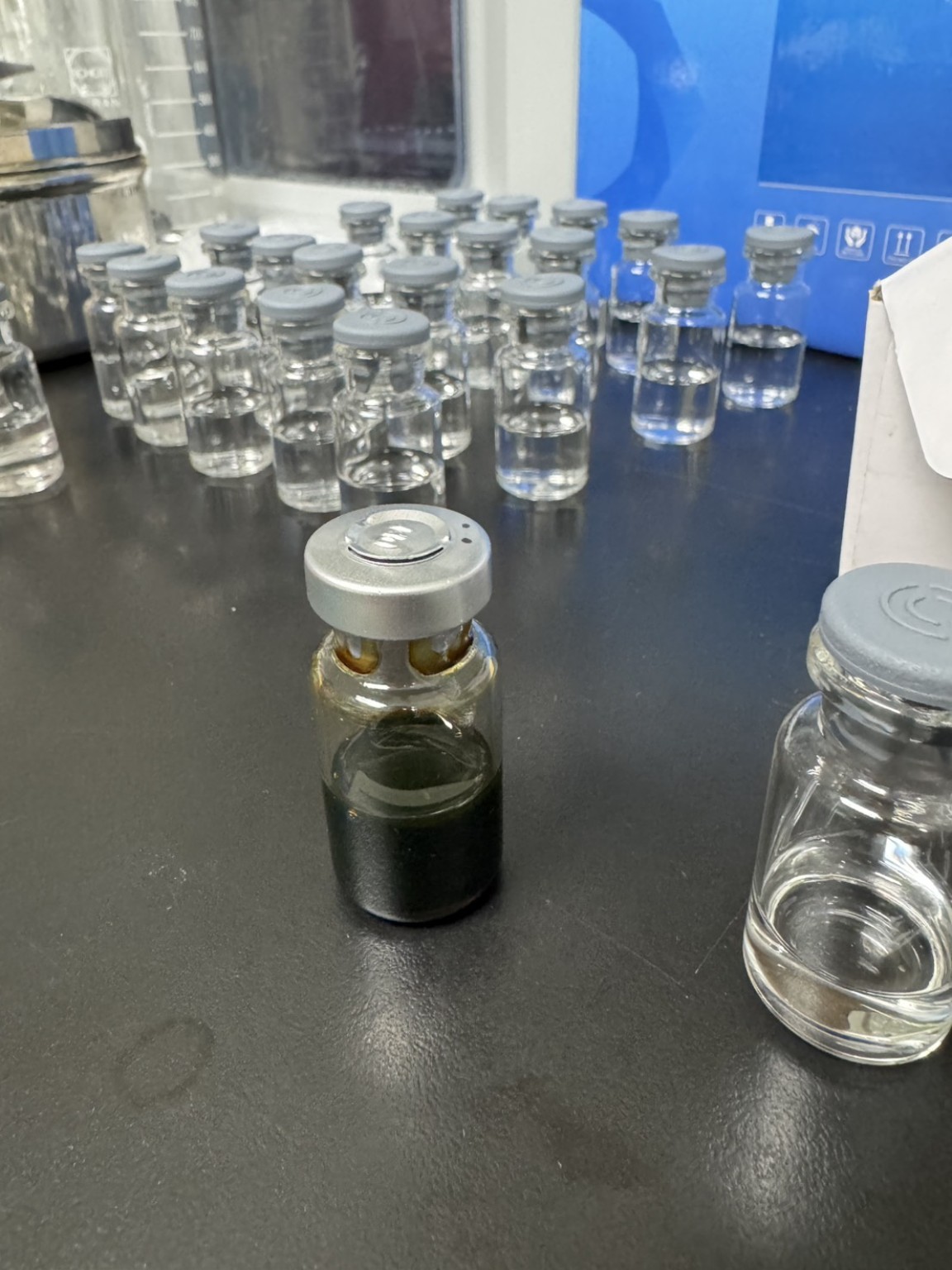
Photo 1 | The delivered TFA-01 injectable nanoformulation: 5 mL per vial, with an Antcin A concentration of 150 ppm, intended for subsequent studies in dogs.Photo 2 | The dark brown liquid in the foreground is a separate, higher-concentration sample. The vials behind it contain the delivered 150 ppm study formulation.
Nanoformulation Development Focuses on Dose and Dosing-Regimen Optimization
Nanoformulation development aims to further optimize Antcin A dispersion and utilization and provide a basis for evaluating the dose per administration, duration of pharmacological activity and interval between injections.
Canine osteoarthritis requires ongoing management. If subsequent studies demonstrate that the nanoformulation can maintain the intended effect while reducing dosing frequency, it may improve convenience for dogs and their caregivers. These remain development objectives; actual effects and dosing regimens will be evaluated in subsequent studies.
Huanzhang Continues Development Work in China
Delivery of this injectable nanoformulation provides a foundation for progressing from formulation development to preparations for studies in dogs. Huanzhang will continue collaborating with Shanghai Paitesai and the research teams on the canine osteoarthritis program, with subsequent safety evaluation and registration-document preparation to follow the study plans.